
Balance bike or scooter
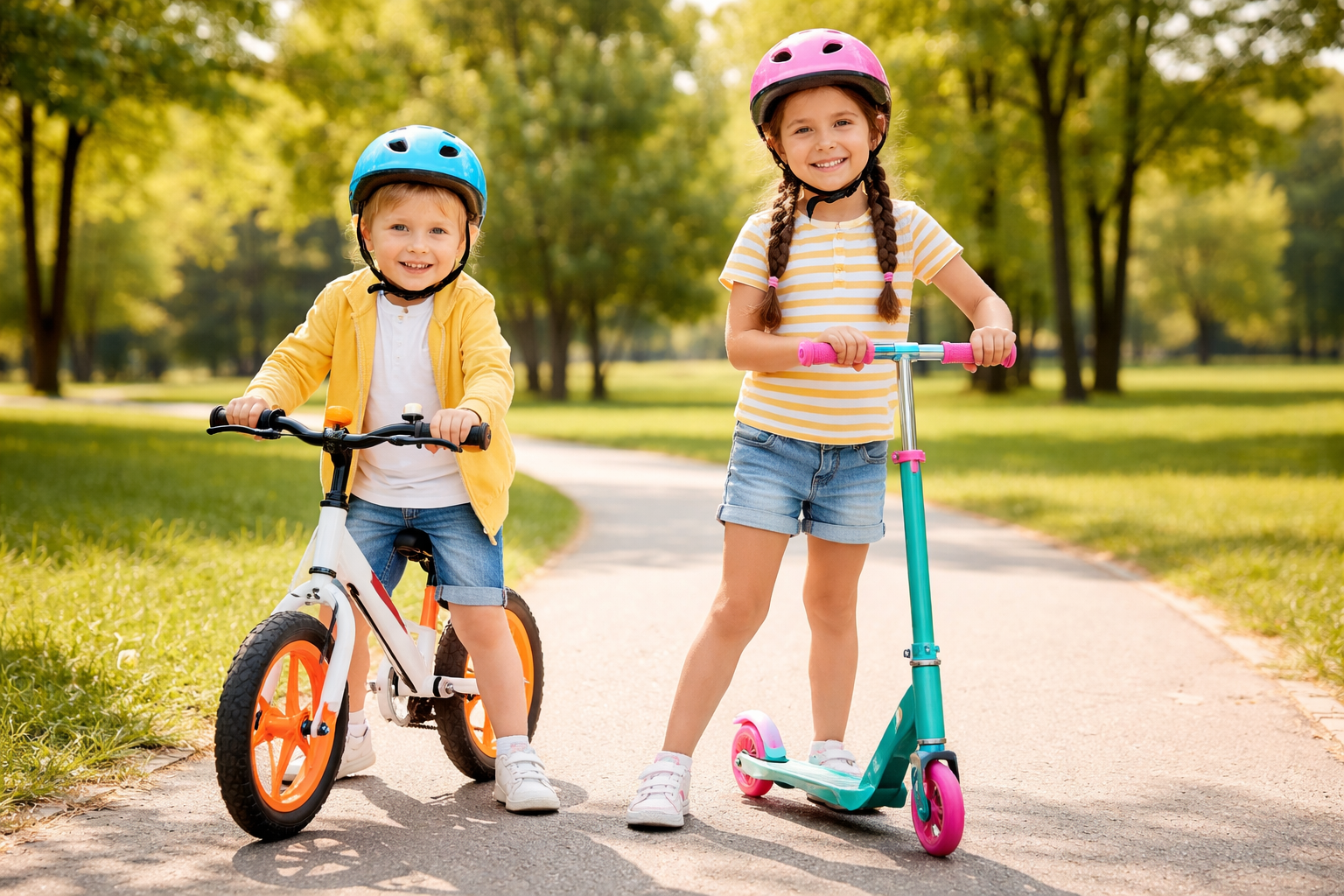 When choosing between a balance bike and a scooter for your child, consider the following important factors:
- developmental advantages each offers,
- their suitability for different ages,
- the skills they help cultivate.
Balance bikes are crafted to enhance riding abilities by teaching children how to balance and coordinate their movements effectively. Mastering this skill is crucial for making the leap to traditional bicycles in the future. As kids propel themselves forward with their feet while keeping them off the ground, they strengthen core muscles that contribute significantly to overall motor development.
Conversely, scooters present a unique experience. Generally, they are more accessible for younger children since they demand less coordination initially. However, using a scooter engages one leg at a time, which may hinder comprehensive balance development compared to balance bikes.
Both choices promote active play and exercise, fostering independence in movement as children explore their surroundings. Balance bikes offer versatility; they're suitable for various terrains and encourage greater outdoor adventures. Studies indicate that kids who master balance bikes often find it easier to transition to pedaled bicycles due to the confidence gained from early balancing practice.
Ultimately, if you seek a toy that lays the groundwork for future biking skills while boosting core strength and coordination, a balance bike is probably your best bet. On the other hand, if you're prioritizing ease of use or need something simple for quick rides around the neighborhood, a scooter might be an excellent option as well.
Understanding balance bikes
Balance bikes are special two-wheeled bicycles designed without pedals, catering primarily to young children. These innovative bikes serve as fantastic tools for helping kids acquire essential riding skills. As they ride, children learn to balance and steer with ease, while the lightweight construction allows for effortless maneuverability, enhancing their confidence and fostering independence.
A standout feature of balance bikes is the adjustable seat, which accommodates a child's growth and ensures a comfortable fit as they refine their skills. While seated, youngsters propel themselves using their feet, gaining crucial experience in maintaining stability—an important ability that will serve them well when they eventually transition to traditional bicycles.
Research shows that mastering the use of a balance bike not only supports physical development but also cultivates emotional resilience. Kids who tackle the challenges of riding often emerge with boosted self-esteem and determination. This foundational experience lays a strong groundwork for future cycling adventures, making balance bikes an excellent choice for encouraging active play and outdoor exploration.
Understanding balance bikes means recognizing how they help young riders develop vital balancing skills while offering an enjoyable way to nurture independence.
What is a balance bike?
Balance bikes are compact, lightweight bicycles specifically designed for toddlers and young children. These innovative bikes enable kids to master balance and coordination without the need for pedals. With a low frame that allows little ones to keep their feet firmly on the ground, these bikes provide stability as children propel themselves forward using their legs while maintaining their balance.
Typically suited for ages 18 months to around 5 years, riding a balance bike helps youngsters strengthen their core muscles, which are crucial for overall motor development. This foundational experience not only enhances physical skills but also fosters emotional resilience and boosts self-confidence in budding riders.
Moreover, balance bikes promote active play and encourage outdoor adventures, granting children a sense of independence in their movements. Research indicates that those who become proficient on a balance bike often transition smoothly to traditional bicycles due to their earlier practice with balancing. In essence, balance bikes serve as an outstanding resource for nurturing both coordination and balance in young learners.
How balance bikes aid in balance development
Balance bikes are a fantastic tool for helping young children master their balance. These pedal-less bicycles allow kids to concentrate on steering and braking while keeping their feet close to the ground. This hands-on experience is vital for developing core strength and spatial awareness, both of which are essential for effective balance.
As little ones propel themselves forward with their legs, they engage their core muscles, enhancing stability and coordination. This activity not only fosters physical growth but also boosts confidence as they gain the ability to move around independently. Plus, the adjustable seat means that as children grow, they can continue to refine their balancing skills comfortably.
Studies indicate that learning to balance on a bike can significantly improve self-esteem and emotional resilience—traits that empower children to face new challenges. By integrating balance bikes into playtime, we nurture independence while laying a solid groundwork for future biking adventures. When it’s time to transition from a balance bike to a traditional bicycle, those early lessons in balancing make the process much smoother.
Overall, balance bikes are instrumental in developing children's motor skills by encouraging active play and stability through fun activities.
Benefits of using a balance bike for riding skills
Incorporating a balance bike into playtime significantly boosts children's cycling abilities and paves the way for future biking success. One major benefit is the improvement in balance; as kids propel themselves forward with their legs, they learn to maintain stability. This hands-on activity not only enhances their core strength but also sharpens their coordination.
Moreover, balance bikes equip children with essential steering skills, enabling them to navigate turns and dodge obstacles effectively. As they refine these abilities, they don't just improve physically; they also gain confidence through greater independence in their movement.
Safety is another important aspect of balance bikes. With low frames and lightweight designs, these bikes minimize the risk of falls. This thoughtful construction allows kids to hop on and off easily, contributing to a safer riding experience overall.
Additionally, using a balance bike promotes outdoor play and physical activity. Children enjoy active fun while reaping the health benefits that come with it—an essential part of their overall development. Studies indicate that kids who thrive on balance bikes typically transition more smoothly to pedal bicycles thanks to the foundational skills they've acquired.
Overall, introducing a balance bike during playtime yields numerous advantages:
- enhances riding abilities by improving balance,
- ensures safety,
- nurtures independence,
- fosters healthy habits through exercise.
Understanding scooters
Scooters have become a favorite among children, providing an exciting way for them to stay active. These fun ride-on toys typically feature either two or three wheels, allowing kids to push off with one foot while the other rests on the deck. This design enhances stability and balance, making scooters especially appealing to toddlers who often find it easier to ride due to their lower center of gravity.
A significant benefit of riding a scooter is that it fosters steering control. As kids maneuver their scooters, they develop essential coordination skills that contribute to their overall motor development. Not only is riding enjoyable, but it also serves as a fantastic form of exercise, inspiring children to explore their surroundings.
When selecting a scooter for young riders, it's important to consider age-appropriateness. Many models are tailored specifically for younger users and feature:
- lightweight frames,
- safety elements designed for beginners,
- designs that allow children as young as 2 years old to enjoy the thrill of riding.
While scooters may not offer the same level of balance training as balance bikes, they still provide valuable opportunities for practicing control in motion. Additionally, riding scooters encourages physical growth and social interaction when kids zip around together. This makes them an ideal choice for playdates or group activities.
In essence, appreciating scooters involves recognizing how they promote stability, steering skills, and active play among young riders. They serve as effective instruments for physical activity while ensuring that learning remains both fun and suitable for various ages.
What is a scooter?
Scooters are fun and lightweight vehicles, typically designed for children, featuring either two or three wheels. Young riders can easily propel themselves by pushing off the ground with one foot while the other rests on a platform. This clever design not only enhances stability but also promotes balance, making scooters particularly appealing to toddlers. Their low center of gravity offers extra support during rides.
One of the standout features of scooters is their versatility. They can be used on various surfaces, making them ideal for both indoor and outdoor adventures. Many models come equipped with adjustable handlebars that allow them to adapt as your child grows taller. This means kids can enjoy riding for years without needing a new scooter every time they have a growth spurt.
Riding scooters also fosters essential coordination and steering skills in children. As they navigate turns and dodge obstacles, they engage in physical activities that enhance their overall motor abilities. Additionally, scooters often include safety features tailored specifically for younger users, such as:
- sturdy frames,
- non-slip surfaces,
- enhanced stability,
- lightweight design,
- easy maneuverability.
These elements ensure that kids can explore their surroundings in a fun yet secure manner. In essence, scooters serve as excellent tools for promoting active play among young children while supporting their physical development through enjoyable exercise experiences.
Why scooters are easier to learn than balance bikes
Scooters tend to be more accessible for toddlers compared to balance bikes, and there are several reasons for this.
To begin with, the lower deck height of scooters allows little ones to easily hop on and off. This ease of access is essential for young riders, as it encourages them to participate in the activity with enthusiasm.
Additionally, many scooters come equipped with three wheels, which offer greater stability than their two-wheeled counterparts. This design instills confidence in new riders as they learn how to navigate their surroundings. With that added support, children can concentrate on steering without the constant worry of balancing, making the whole learning experience feel less daunting.
Riding a scooter is also a joy for kids; they love the sensation of pushing off and gliding smoothly along. This fun aspect fosters a positive attitude toward physical activity and encourages them to practice more often.
Although balance bikes do contribute to developing foundational cycling skills, they demand more coordination right from the start. Balancing on two wheels can be challenging for some youngsters. In contrast, scooters provide an age-appropriate means of movement that nurtures physical growth and coordination while keeping playfulness at the forefront.
Overall, scooters present an appealing alternative for young learners who might not yet be ready to tackle the complexities of riding a balance bike. They effectively promote active play and skill-building in a delightful manner.
Comparing balance bikes and scooters
When it comes to choosing between balance bikes and scooters, several key factors can impact a child's growth and enjoyment. One of the most crucial elements is age-appropriateness. Balance bikes are particularly well-suited for toddlers aged 18 months to 5 years because they foster important skills like balance and coordination. Scooters, while accessible to kids as young as 2, typically attract slightly older children who thrive on speed and agility.
Another consideration is cost-effectiveness. Although balance bikes come in a range of prices, they often provide long-term value by equipping kids with the riding skills necessary for a smooth transition to traditional bicycles. Conversely, scooters may seem more affordable at first but can require frequent replacements as children grow or outgrow their models.
The versatility of these two options also varies significantly:
- balance bikes excel in outdoor environments,
- easily maneuvering across different terrains thanks to their lightweight construction and adjustable seats,
- this adaptability encourages kids to explore and engage in active play outside,
- which plays a vital role in enhancing their motor skills.
When it comes to balance training, balance bikes take the lead. They are specifically designed to teach children how to maintain stability while moving forward. As kids propel themselves using their legs, they strengthen core muscles that are essential for overall development. While scooters do encourage some degree of balance through steering control, they generally engage one leg at a time and may not offer the same comprehensive benefits for developing balancing abilities.
Both balance bikes and scooters have distinct advantages when it comes to supporting a child's physical development journey. The choice between them ultimately hinges on considerations such as age suitability, budget constraints, versatility for various activities, and the specific skills you wish your child to cultivate.
Age-appropriate options for balance bikes and scooters
Choosing the right balance bike or scooter for your child depends on their developmental stage. Balance bikes are perfect for little ones aged 18 months to 5 years, as they help develop important skills such as balance and coordination, laying a strong foundation for young riders. Many of these bikes come with adjustable seats, ensuring comfort and accommodating growth during this crucial learning phase.
In contrast, scooters typically appeal to children starting around age 3. Their ease of use and fun factor make them popular among slightly older toddlers. Many models are designed specifically for younger users, featuring lightweight materials and safety elements that enhance confidence for beginner riders.
When deciding between a balance bike and a scooter, parents should consider the following:
- child's readiness,
- comfort level with each option,
- personal preferences regarding skill development,
- ease of use suited for different ages.
- independence during playtime.
Both choices promote physical activity, allowing kids to explore their surroundings with confidence.
Which option is more cost-effective?
When weighing the cost-effectiveness of balance bikes versus scooters, several key aspects should be considered. Generally, scooters have a lower upfront cost, making them more appealing at first glance. Yet, balance bikes often provide greater value over time.
A well-made balance bike tends to retain its resale value better than a scooter, making it a wiser investment in the long run. These bikes are crafted from sturdy materials designed to endure outdoor adventures, which not only prolongs their lifespan but also allows for easy passing down to siblings or reselling. In contrast, scooters might require frequent replacements as children grow or if they suffer significant wear and tear.
Additionally, balance bikes excel in promoting skill development. They lay the groundwork for riding traditional bicycles by enhancing balancing and coordination abilities. This early training can ultimately save parents on future cycling expenses; kids who start with balance bikes typically transition effortlessly to pedal bicycles without needing extensive additional training or gear.
Both options encourage active play and contribute to physical growth. Nevertheless, opting for a high-quality balance bike often results in more substantial long-term savings for families considering durability and potential future use.
Versatility: When to choose a balance bike or scooter
When deciding between a balance bike and a scooter, it's important to consider your child's specific needs. Balance bikes are fantastic for developing fundamental riding abilities. They're particularly suitable for children aged 18 months to 5 years who are just starting to learn how to balance and move effectively. These bikes promote outdoor play on various surfaces, allowing kids to build confidence while also strengthening their core muscles.
On the other hand, scooters serve as an excellent option for younger children, typically around the age of 3. They offer ease of use for both short jaunts and longer journeys. Thanks to their lightweight design, kids can push off with one foot while resting the other on the deck, which helps maintain stability and makes steering manageable without requiring too much coordination at first.
Both choices encourage physical activity in different ways:
- balance bikes enhance fundamental riding abilities,
- they are suitable for ages 18 months to 5 years,
- scooters are ideal for younger children around age 3,
- they are lightweight and easy to use,
- balance bikes promote outdoor play on various surfaces.
If your child enjoys exploring diverse environments and is eager to develop essential biking skills, a balance bike may be the ideal choice. Conversely, if they lean towards quick trips around the neighborhood or enjoy group activities with friends, a scooter might suit them better.
Ultimately, taking into account your child's preferences for active play will guide you in selecting the right option that blends enjoyment with developmental benefits.
Making the right choice for your child
When choosing between a balance bike and a scooter for your little one, consider the following key factors:
- their age and abilities,
- fostering independence,
- skill development,
- what excites your child the most.
Balance bikes are ideal for children aged 18 months to 5 years, as they aid in developing essential skills like balance and coordination. For younger kids, particularly around the age of 3, scooters may appear more attractive because they're simpler to handle.
Fostering independence is another important aspect. Balance bikes allow children to propel themselves forward using their legs while keeping their feet elevated, which boosts their confidence and self-sufficiency in movement. Scooters can also encourage independence, but they place more emphasis on steering and controlling one leg at a time.
It's crucial to think about skill development when making your selection. Balance bikes enhance core strength through balancing exercises—an essential component of overall motor growth. Conversely, scooters provide chances to practice coordination but might not engage the core muscles as effectively as balance bikes do.
Lastly, consider what excites your child the most. If they show enthusiasm for cycling or outdoor exploration, a balance bike could be the perfect match. On the other hand, if they're drawn to speed and agility or enjoy riding with friends during playdates, a scooter might be more appealing.
Ultimately, both choices promote active play and skill enhancement. By taking your child's interests into consideration, you can make an informed decision that supports their development and enjoyment.
Factors to consider: Age and skill level
When selecting a balance bike or scooter for your child, it's essential to consider their age and level of experience. Here are some key points to keep in mind:
- Balance bikes are typically suited for younger kids, usually those aged between 18 months and 5 years,
- During this stage, children develop core strength and coordination through the balance training these bikes provide,
- They propel themselves forward with their feet while keeping them off the ground, picking up vital balancing skills that will set the stage for riding a bicycle later on,
- Scooters cater to slightly older kids, generally starting around age 3,
- Scooters offer an enjoyable way for children to stay active while honing their steering control and coordination.
It's important to assess your child's comfort level and physical capabilities when making this decision. If they're eager for more challenging riding experiences, a scooter could be just what they need. Conversely, if they're still mastering their balance skills, a balance bike is likely a better choice.
Ultimately, understanding your child's age and skill set will help you choose either a balance bike or scooter that promotes independence while fostering essential motor skills needed for exciting playtime adventures.
Assessing your child's interests in cycling or scooting
To gauge your child's interest in cycling or scooting, observe their excitement and preferences. Do they seem thrilled by the idea of biking, or do they lean towards the carefree joy of scooting? Engaging them in conversations about their experiences with both can provide valuable insights into what sparks their enthusiasm.
Offering encouragement plays a crucial role in fostering your child's independence and self-esteem. If you notice them beaming while riding a balance bike, it might suggest they're ready to develop essential skills like balance and coordination. Conversely, if they prefer the straightforward fun of a scooter, it could indicate they enjoy being active without the added challenge of balancing.
Physical activity is vital for children's growth, so consider how each option fulfills their need for enjoyment and exercise. Both balance bikes and scooters promote movement; however, balance bikes emphasize skill development related to cycling, whereas scooters focus on speed and steering.
Allowing your child opportunities to experiment with both options can reveal which one truly resonates with them. Visiting parks or open spaces where they can roam freely will encourage exploration. Ultimately, understanding what your child enjoys most will guide you in selecting the best activity to support their happiness and physical development through active play.